In NRM2, a trade boundary is the line between one work section and the next: where excavation stops and concrete starts, where a window stops and the finishes around it begin. The rules of measurement tell you what each section includes and what it leaves to a neighbour. Most boundary problems come from drawings that do not respect those lines, not from the rules themselves. This article explains how the boundaries work, where they usually blur, and how to record your decisions so another surveyor can follow them.
TL;DR
- NRM2 is a trade-based system: the bill of quantities is organised into work sections, and each section has its own measurement rules, units and information requirements.
- A boundary is defined by the rules of the section an item is measured in, so you must read the rules of both sections either side of a junction before you decide where an item sits.
- Main contractor's preliminaries are the clearest boundary of all: the RICS guidance treats them as a pricing schedule for the contractor to complete, not as measured quantities.
- Items that fall between sections need a professional decision. Make it once, apply it consistently, and write it down in the bill.
- A boundary decision that is not recorded is a double-counting risk for the next person to open the file.
Table of Contents
- What a trade boundary means in NRM2
- Why boundaries matter to the person pricing
- Reading a boundary from both sides
- A worked example: earthwork support
- The preliminaries boundary
- Where drawings do not follow the sections
- A boundary decision log
- Boundary checks before issuing the bill
- Where drawing data helps and where judgement stays
- How QuantiFlow fits
- FAQ
- Sources
What a trade boundary means in NRM2
NRM2 is the RICS standard for detailed measurement for building works. It sits alongside NRM1, which covers order of cost estimating and cost planning, and NRM3, which covers building maintenance works. Where NRM1 groups cost by building element, NRM2 groups it by work section, which is the trade-based structure a contractor or subcontractor prices against.
Each work section is a cost centre. The research behind this article gives two examples of how the sections are numbered: section 5 is excavating and filling, and section 38 is mechanical services. Between them sit the other building trades and services. A "boundary" is simply the edge of one of those sections: the point at which the rules of one section stop describing an item and the rules of another take over.
Three things define that edge:
- The measurement rules. These say what is measured, in what unit, and what is deemed included.
- The information requirements. These say what must be stated in the item description, so a pricer knows what is being priced.
- The definitions. These say what the section covers, and sometimes name the work that belongs elsewhere.
If you want a fuller grounding in the standard before going further, our NRM2 explained article covers the structure and purpose of the document.
Why boundaries matter to the person pricing
A bill of quantities is only useful if a tenderer can price every line without wondering what the line next to it includes. If an item is measured in two sections, the price is counted twice. If it is measured in neither, the client pays for it later as a variation.
Boundaries also govern who prices what. A section boundary often follows a subcontract package, so a misplaced item may land in front of a tenderer who does not expect to price it. That is why the placement of an item is not a cosmetic choice. It shapes the risk allocation of the tender.
Reading a boundary from both sides
The most common mistake is to read only the section you are measuring in. A boundary has two sides, and the rule that settles a question is often on the other one.
Work through a junction in this order:
- Identify the item and the section you think it belongs to.
- Read the rules of that section for the item, including any deemed-included work.
- Read the rules of the adjoining section. Check whether it claims the item or expressly includes it in a different unit of measurement.
- Check the information requirements in each. They often reveal which section expects to receive the item, because the description fields name it.
- Decide, and note the decision in the bill or in a measurement notes document.
The downloadable NRM2 document from RICS is the first place to look. The version history matters too: RICS publishes updated editions, so confirm that you are using the edition your contract and employer's requirements refer to. The current RICS page lists NRM2 and its updates in the October 2022 version.
A worked example: earthwork support
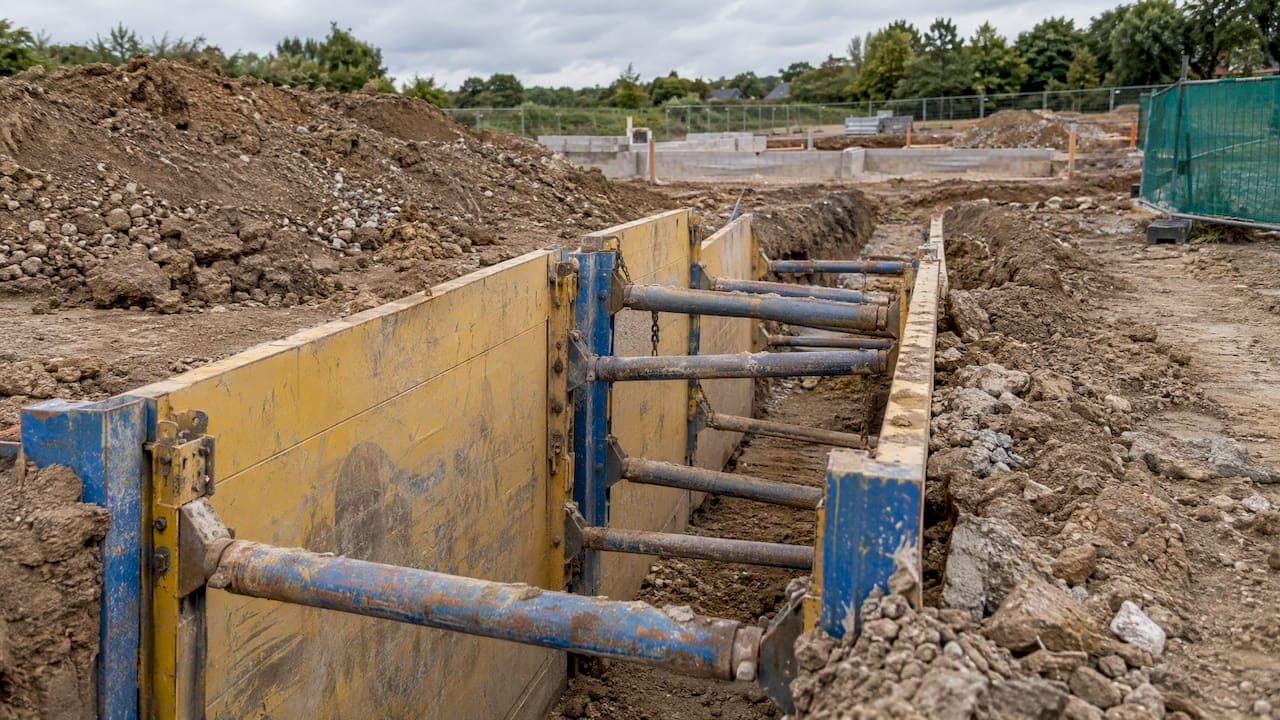
Excavation is a good illustration because its boundary is easy to get wrong. According to iSurv's note on measurement conventions, the second edition of NRM2 re-introduced the need to include earthwork support to all faces of excavation over 250 mm deep in the measured work.
That has a practical consequence at the boundary between excavation and the main contractor's preliminaries. Under older habits, temporary support was often left to the contractor as a method matter. Where the rules now bring it into the measured excavation work, leaving it out of the take-off removes a measured item and quietly pushes risk to tenderers, while pricing it in preliminaries as well would count it twice.
The lesson is not limited to excavation. When a rule changes between editions, a template that you built on a previous project can carry the old boundary into the new one. Check your item library against the edition you are working to.
The preliminaries boundary
The sharpest boundary in the document is between measured work and the main contractor's preliminaries. The RICS guidance explains that a quantity surveyor cannot definitively quantify a main contractor's preliminaries, because they depend on how the contractor interprets the project, the method of working chosen and the contractor's own resource planning. The bill should therefore provide a pricing schedule, a list of headings, and leave the contractor to insert its own charges. The detail is in the RICS NRM2 text.
In practice that gives you two questions for any cost that appears on a site:
- Is it a cost of the work itself? Then it belongs in the unit rate of a measured item.
- Is it a cost of running the site? Then it belongs in the contractor's preliminaries.
A subcontractor's own site costs are where the two get confused. Practitioners often struggle with the difference between what is included in a unit rate and what must be shown as a separate main contractor's preliminary item. Muddle the two and the result is double-counting, which is a particular problem for anyone who has to audit the cost plan later.
Do not assume a standard percentage either. BCIS data does not support a single typical figure. In one featured analysis, a project with restricted working space and difficult access recorded preliminaries of 46.33% (BCIS, published 5 May 2020). That is one project, not a benchmark, and it makes the point that preliminaries follow site constraints. Our guide to requiring contractor breakdowns of NRM2 preliminaries goes into how to ask for the detail.
Be equally careful about which index you use when you compare costs across projects. BCIS makes the distinction between general building cost indices, which track input costs such as labour and materials, and market-facing measures such as the All-in Tender Price Index, which reflect what contractors are actually pricing, including margins, risk and overheads (BCIS, 7 April 2026). Choosing the wrong one is a common error in cost modelling.
Where drawings do not follow the sections
Architects draw buildings as assemblies. NRM2 measures trades. The mismatch produces the same handful of boundary problems on almost every job.
Items that sit between two sections
A lintel over an opening, a cavity tray at a junction, a sill that is part window and part wall: each has a reasonable claim to two sections. NRM2 provides a standard framework, but drawings do not always align cleanly with it, and the surveyor has to reallocate the item. There is no shortcut. Read both sections, choose the one whose rules describe the item most fully, and apply that choice to every similar item in the project.

Non-measurable items
Some work is not explicitly covered by the tabulated rules at all. Temporary works specific to the design, protective measures near an existing structure, or an unusual fixing might fall in this group. Where the rules are silent, the bill still has to be coherent and reflect how the building will actually be built. Describe the item fully, give it a unit that a tenderer can price, and state the assumption.
Services and builder's work
Mechanical and electrical packages generate their own boundary issues, because the specialist trade measures its own installation while the main works carry the holes, chases, plinths and making good. Section 38 is the mechanical services section, and the take-off for a services-heavy job needs a clear line between what the services subcontractor prices and what the building trades carry. The steps are covered in our MEP quantity take-off guide.
Structural steel and its neighbours
Steelwork touches foundations, concrete, fire protection and finishes. Each of those is a boundary, and each has a different measurement unit. A structural steel take-off is easier to audit when you list those interfaces before you start measuring.
Extensions and alterations
Small domestic extensions are where boundaries blur most, because new work meets existing fabric: cutting openings, making good, tying in new walls. Demolition, alteration and new work are distinct, and each opening you form needs to be assigned once. Our worked house extension take-off shows the checks.
A boundary decision log
The simplest control is a one-page log that travels with the bill. For every boundary decision, record:
| Field | What to write |
|---|---|
| Item | A short description and its drawing reference |
| Candidate sections | The two sections that could claim it |
| Decision | The section where it is measured |
| Reason | The rule or definition that supports the choice |
| Similar items | Where the same decision has been applied |
| Date and initials | Who decided, and when |
The log does three jobs. It stops a second surveyor from reversing your decision without knowing why. It gives you an answer when a tenderer queries an item. It also lets you check consistency, which is more valuable than any individual choice: an item placed in section A on one floor and section B on the next is the very thing that causes double-counting.
Our article on NRM2 take-off rules for audit-ready bills sets out a wider approach to keeping each measured line traceable.
Boundary checks before issuing the bill
Before a bill leaves your office, run these checks:
- Edition check. Confirm that every section's rules match the edition named in the tender documents.
- Interface scan. List every junction between sections on the job (ground to substructure, frame to envelope, envelope to finishes, building to services) and confirm each has one owner.
- Deemed-included check. Where a rule says work is included in an item, make sure you have not measured it again elsewhere.
- Preliminaries check. Confirm the preliminaries are a pricing schedule, and that no site-running cost sits inside a measured rate.
- Unit check. A boundary often changes the unit, for example from area to linear metre, so verify that quantities were taken in the unit the receiving section requires.
- Notes check. Every assumption made at a boundary is stated in the bill.
As a minimum, a second pair of eyes should review the log, not just the quantities.
Where drawing data helps and where judgement stays
Much of the effort in a boundary-heavy bill is not measuring but allocating: deciding which section an item belongs to. Software can read the geometry of a PDF drawing and propose quantities, but the allocation decisions above are professional judgement, and the surveyor has to stay in charge of them. Our guide to measuring PDF drawings for NRM2 take-offs looks at what can be taken from a drawing and what cannot.
How QuantiFlow fits
QuantiFlow is in development. It is designed to read construction drawings and produce a draft bill of quantities for a quantity surveyor to review and sign off, which leaves boundary decisions with you. You can see where the project stands on the QuantiFlow site.
FAQ
What is the difference between NRM1 and NRM2?
NRM1 covers order of cost estimating and cost planning for capital building works, so it is used before detailed design is complete. NRM2 covers detailed measurement for building works and is used to prepare bills of quantities for tender. NRM3 deals with cost planning for building maintenance works. All three are published by RICS.
Can I measure the main contractor's preliminaries?
Not in the sense of fixed quantities. The RICS guidance treats preliminaries as dependent on the contractor's method and resourcing, so the bill should provide a schedule of headings for the contractor to price. You can still specify the constraints that affect them, such as access, working hours and phasing.
What should I do when the rules do not cover an item?
Describe it fully, choose a unit a tenderer can price, place it in the section whose rules are closest, and record your assumption in the bill. Consistency matters more than perfection, so apply the same treatment to every similar item.
Does the edition of NRM2 change where an item sits?
Yes, it can. For example, iSurv notes that the second edition re-introduced earthwork support to faces of excavation deeper than 250 mm as measured work. Always check the edition named in your tender documents before reusing an old template.
Sources
- RICS: NRM, New Rules of Measurement
- RICS: NRM 2, Detailed measurement for building works (1st edition)
- RICS: New rules of measurement, NRM2 October 2022 update
- iSurv: Earthwork support, measurement conventions
- BCIS: featured analysis, nursery extension
- BCIS: six rules for choosing the right index for reinstatement cost management
Recommended
- NRM2 explained: the RICS standard for measuring building works
- NRM2 takeoff rules to make BoQs audit ready for UK quantity surveyors
- NRM2 Ready 5 Step Structural Steel Takeoff for UK Estimators
- Audit Ready NRM2 MEP Quantity Takeoff: Eight Steps for UK SME QSs
This article is for general information only and is not professional, legal or commercial advice. Quantity surveying decisions should be taken by a qualified professional with reference to the specific project, drawings and contract in question. Content is produced with AI assistance and reviewed before publication. QuantiFlow Ltd accepts no liability for reliance on it.